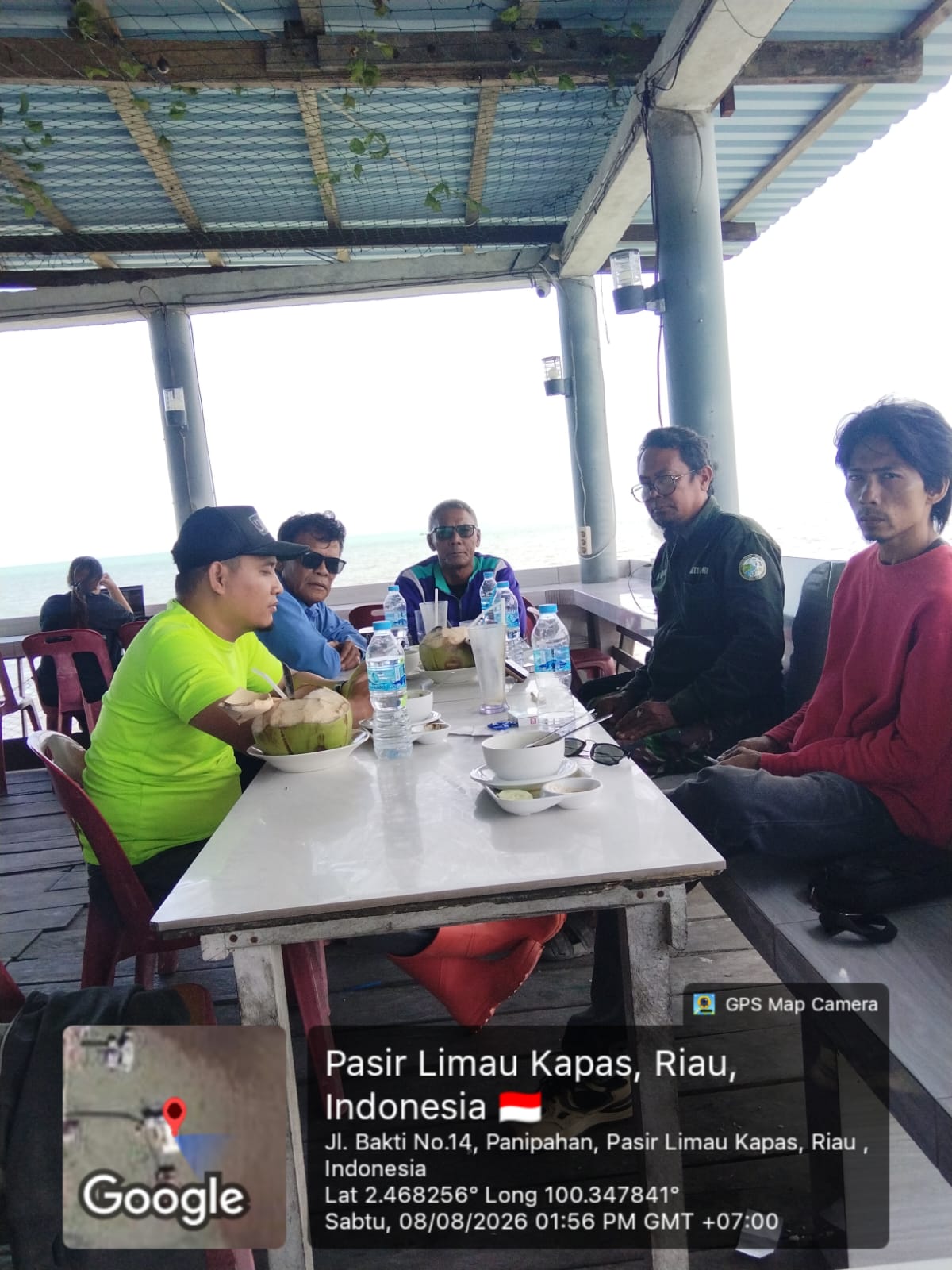
PANIPAHAN, August 8, 2026 – MJP – The breathtaking sunset view over the Malacca Strait served as the backdrop for a strategic discussion that was both relaxed and substantial. On Saturday (Aug 8), the Board of Directors and Supervisory Board of the Koperasi Produsen Pangan Hulu Hilir Bersatu (Upstream-Downstream Food Producer Cooperative) held a socialization program for the Social Forestry (PSKL) initiative based on Carbon Economic Value (NEK) and Food Security, together with community leaders at a floating cafe in Panipahan City, on the coast of Labuhanbatu and Rokan Hilir.
This unique meeting combined the beauty of the coastal nature with the substance of national environmental policy. Community leaders, who have long been the guardians of tradition and social stability in the coastal and downstream areas, were invited to understand how peatland restoration upstream (in Panai Tengah & Hilir) directly impacts their food security and economy downstream.
Connecting Forests, Carbon, and Dinner Plates
Cooperative Chairman, Ilyas Simatupang, emphasized in his presentation that PSKL is not just about land permits, but rather a new economic ecosystem.
“We often see forests and seas as two separate entities. In reality, the health of the peatlands in Panai determines the water quality and climate in coastal areas like Panipahan. Through the Carbon Economic Value (NEK) scheme, every sago and aren palm tree we plant upstream has monetary value that can return to the community. This is a form of long-term food security,” explained Ilyas amidst the waves of the Malacca Strait.
The community leaders appeared enthusiastic in listening to explanations regarding carbon trading mechanisms and export market potentials for paludiculture products. They realized that their support is crucial for creating social stability for thousands of cooperative members in the river basin areas.
“Soft Power” Strategy Amidst Natural Beauty
The choice of location at a floating cafe was deliberately made to build a more fluid and inclusive approach. Unlike formal meetings in closed rooms, the open atmosphere by the sea made it easier for the leaders to express their aspirations and concerns honestly.
One local community leader, Mr. Rustam Pohan, expressed his appreciation. “An approach like this makes us feel valued. We are not just given instructions, but invited to discuss while enjoying the gifts of nature. We are ready to support this program because we see the clear benefits for future generations,” he stated.
Bridging Upstream and Downstream
This socialization also became a momentum to strengthen synergy between the upstream region (peatlands) and the downstream region (coastal). The Cooperative is committed that harvest results from the PSKL program will be processed and marketed through networks involving business actors in the coastal areas, ensuring that the economic wheel turns evenly from Panai to Panipahan.
As the meeting concluded under the twilight sky of Panipahan, the Koperasi Produsen Pangan Hulu Hilir Bersatu stepped forward with greater confidence. The combination of technical NEK strategies, commitment to food security, and a humanist approach to key figures has become the cooperative’s greatest social capital in facing verification challenges and future business development.
Source: PPHHB Cooperative Public Relations
MJP Team
About the Author